- Home
- Insights
- Sustainability
- Disposable vs. Reusable Products: What's Best for Your Operation?
Disposable vs. Reusable Products: What's Best for Your Operation?

Every food service operation eventually asks the same question: should we serve on disposables, or invest in reusable plates, cups and cutlery? There is no single right answer. The best choice depends on your service style, your labor and dishwashing capacity, your customers and the rules you operate under. This guide walks through the trade-offs so you can decide category by category.
Start with your service model
Takeout, delivery, food trucks, concessions and drop-off catering almost always run on disposables, because the product leaves with the customer. Full-service dining rooms lean toward reusables for presentation. Most operations end up mixed: reusable plates in the dining room, takeout containers and portion cups for to-go orders, and paper napkins everywhere.
Compare the real cost per use
A reusable item looks cheaper because you buy it once, but its true cost includes dishwashing labor, water, energy, detergent, breakage, theft and the space needed to store and wash it. A disposable item costs more per piece but needs no washing and no return trip. To compare fairly, estimate:
- Labor: minutes of dishwashing per 100 covers, multiplied by your hourly wage.
- Utilities: water, hot-water energy and chemicals per rack.
- Replacement: how many reusable items break or disappear each month.
- Disposable spend: case price divided by pieces per case.
Operations with limited dish capacity, high volume or many off-site meals usually find disposables cheaper once labor is included.
Hygiene and food safety
Single-use items remove the risk of a poorly washed plate or cup reaching a customer, which is why hospitals, schools and many institutional kitchens rely on disposable trays, cups and gloves. For high-turnover settings, a fresh item for every guest is simpler to manage than a sanitation process that must run perfectly every time.
Sustainability is not automatic either way
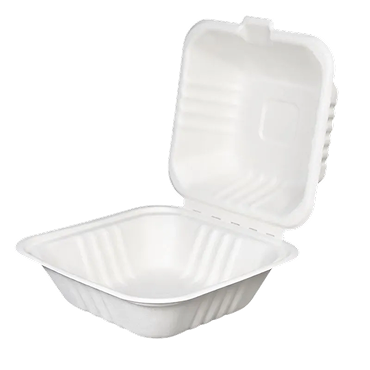
Reusables reduce waste only when they are used many times; washing them has its own environmental cost. Disposables can be part of a responsible program when you choose the right materials — compostable bagasse containers, kraft paper bags and recyclable aluminum foil pans — and when you right-size portions so less packaging is used.
A practical decision framework
- List every item you serve on or in: plates, bowls, cups, lids, cutlery, napkins, trays.
- Mark each one dine-in, takeout or both.
- For takeout items, choose disposables sized to your menu.
- For dine-in items, compare cost per use including labor.
- Standardize sizes so one case of lids fits several cup sizes where possible.
Buying disposables efficiently
If disposables win for part of your operation, buy them the way high-volume kitchens do: by the case or mixed pallet, with consistent sizes so staff never grab the wrong lid. AR Unlimited Supply publishes case packs and pallet configurations on every product page and can quote your full list at once. Request a quote or browse the 2026 catalog.